
When exactly did burning out become the status quo?
Feb 18, 2026The word "burnout" keeps popping up in my conversations lately. Not as a crisis, but almost casually—like it's just expected when you work in corporate or run your own business.
We've normalised it. The late nights, the burning candles at both ends, the running on fumes.
Most people suffer in silence, carrying their busyness like a badge of honour. Confusing exhaustion for resilience. Thinking if they just push through one more week, one more month, one more quarter...
But when exactly did burning out become the status quo?
What is burnout, actually?
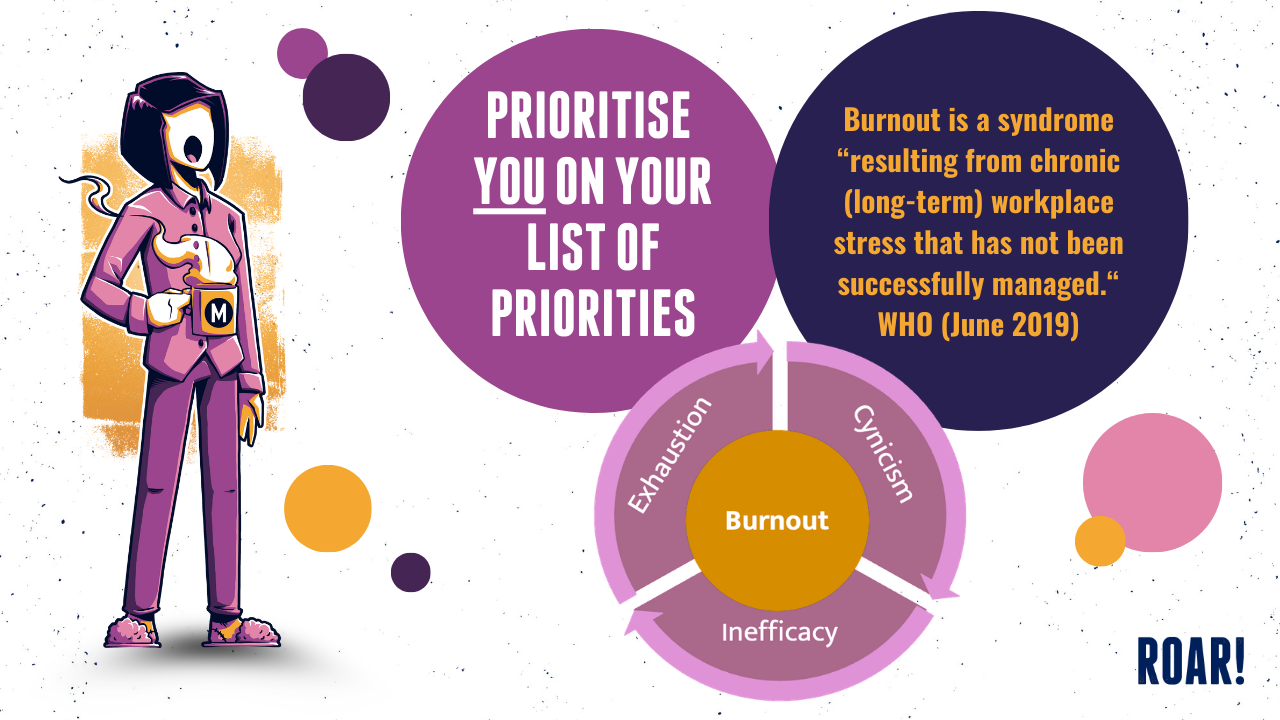
In 2019, the World Health Organization finally gave it a name. They classified burnout as an "occupational phenomenon" resulting from chronic workplace stress that hasn't been successfully managed.
Burnout goes deeper than exhaustion. It's a state of physical, emotional, and mental exhaustion caused by long-term involvement in emotionally demanding situations. It's a gradual process where deeply committed, driven, passionate individuals become disillusioned with work that previously gave them identity and meaning.
The WHO identifies three dimensions of burnout:
- Exhaustion: Feeling emotionally overextended and exhausted by work. Not the kind of tired that a weekend fixes—this is bone-deep depletion.
- Cynicism: Distancing yourself from the people you work with. Becoming detached, negative, developing that "nothing matters anyway" outlook.
- Inefficacy: Feeling low self-worth, empty, unable to feel positive about your contributions. The creeping self-doubt that whispers "maybe I'm just not cut out for this."
Sound familiar?
Here's what this looks like in practice:
Picture your morning before work. Cars crawling through traffic, drivers cursing at delays. Parents juggling breakfast chaos while fielding urgent emails. The WiFi crashes during a client presentation setup. Kids fighting in the background as you frantically search for your headphones. Raw human emotion everywhere—road rage, deadline panic, family stress, tech frustration.
Then the workday officially begins. Whether you walk through office doors or log into video calls from your kitchen table—suddenly, nothing. All that intensity, all that very human emotion, magically disappears.
Welcome to corporate zombie mode. The grey zone where we've trained ourselves to disconnect from our feelings the moment we enter work mode. To paste on the professional smile. To say "I'm fine" when we're anything but.
Why are high performers prone to burnout?
Here's what I've learned from burning out twice and working with hundreds of driven professionals. High performers fall into three specific traps:
They don't prioritise their wellbeing. Self-care is the last thing on their to-do list—if it makes the list at all. Everything else comes first: the deadline, the client, the team, the family. YOU come last.
They don't 'feel' the day. They're not intentional about how they want to show up and feel every day. They just react—to emails, to demands, to crises. Operating on autopilot instead of conscious choice.
Their ambition is unmet with planning. Big dreams, big goals, but their daily activities aren't aligned with them. They're busy, yes. But busy doing what? Often not the things that actually move them toward what they truly want.
Result? They lose focus and burn out.
But here's what really keeps us trapped: the shame. The isolation.
The belief that everyone else is managing fine. That admitting you're struggling means you're weak, you're failing, you're not cut out for this.
But here's the truth: we're all suffering in silence, each convinced we're alone in it.
So we keep showing up, keep performing, keep pushing through. Until we can't anymore.
I know because I've been there. Twice.
First in 2017 – toxic workplace, impossible demands, bullying boss. I could point to external villains.
But then came December 2023. Standing on the stoep of my dream home in Stellenbosch, surrounded by mountain views, having built everything I thought I wanted. And I was absolutely shattered.
This time I couldn't blame anyone else. I'd fallen into all three traps. Even in my dream life, I was running the old programme.
And the cost? It ripples outward in ways we don't count. When you're running on empty, you're losing the very essence of what makes you brilliant. Your star performer burns out, everyone works overtime to cover. Trust erodes. Innovation stalls. The whole culture shifts from "how can we thrive?" to "how do we survive?"
So how do you know if you've crossed from tired to truly burnt out?
How do you recognise the signs?
The first step to breaking any pattern is recognising you're in it. Here are the signs that distinguish fatigue from actual burnout:
Signs of fatigue (you need rest):
- Tired eyes
- Tired legs
- Stiff shoulders and neck
- Whole body tiredness
- Loss of appetite
- Very low energy and motivation
- Lack of concentration
- Difficulty processing information
Signs of burnout (you need systemic change):
- Feeling helpless, trapped, defeated
- Feeling detached or alone in the world
- Having a cynical or negative outlook
- Self-doubt that won't shift
- Procrastinating or taking much longer to get things done
- Feeling overwhelmed by normal tasks
Open your life force
"The Force is what gives a Jedi his power. It's an energy field created by all living things. It surrounds us and penetrates us; it binds the galaxy together." — Obi-Wan Kenobi
Your life force – your energy – is your greatest currency. Not time. Not money. Energy.
And here's the truth most people miss: burnout comes from misalignment, not weakness.
You don't find energy. You generate it. You direct it.
That's why Open your life force is Stage 2 of the five-stage ROAR for MOAR Hero's Journey – a framework I introduce in my new book MOAR! The five stages are: Map your adventure, Open your life force, Act with heart, Rise through the fire, and ROAR for MOAR. Each stage builds on the last, taking you from recognising where you are to fully owning who you're becoming.
This is where your inner Warrior steps in. Not the exhausted, push-through-at-all-costs version – the centred, courageous one.
When you start opening to a different way – when you stop accepting burnout as inevitable – that’s when transformation becomes possible. Not just for you. For everyone watching you, thinking they’re alone in their struggle.
When your vision, values, and daily actions align, you access exponential energy. Misalignment drains you. Alignment fuels you. This is why forcing yourself toward the wrong goals feels so exhausting.
This week, you’re not just protecting your energy. You're choosing the standard you live by. And that choice shapes everything you create next.
So here's my invitation to you:
- What if you didn't have to suffer in silence anymore?
- What if burnout being the status quo was a choice we could collectively refuse?
- What if opening your life force – really opening to the possibility of doing brilliant work without destroying yourself – was the most radical act of leadership you could offer?
The journey from burnout to thriving doesn't require adding more to your plate. It requires fundamentally changing how you approach everything already on it.
And it starts with you prioritising you on your list of priorities.
In just 10 days (26 February 2026), my new book MOAR! How to Play to Win Without Burning Out launches. It's everything I've learned from burning out twice, building back up, and discovering there's a way to do hard things with ease.
The full five-stage ROAR for MOAR Hero’s Journey. The inside-out approach that transforms how you show up at work and in life.
Join the waiting list now to be the first to know when pre-orders go live.
You're not alone in this. The exhaustion you're feeling? It's not a personal failing. The struggle you're hiding? Everyone around you is hiding theirs too.
The status quo only stays the status quo as long as we accept it.
Ready to prioritise your wellbeing?
The status quo only stays the status quo as long as we accept it.
Join the waiting list for MOAR! How to Play to Win Without Burning Out—launching 26 February 2026.
Stay up to date
Get your regular dose of ROAR!
Sign up and receive our email updates and news.
